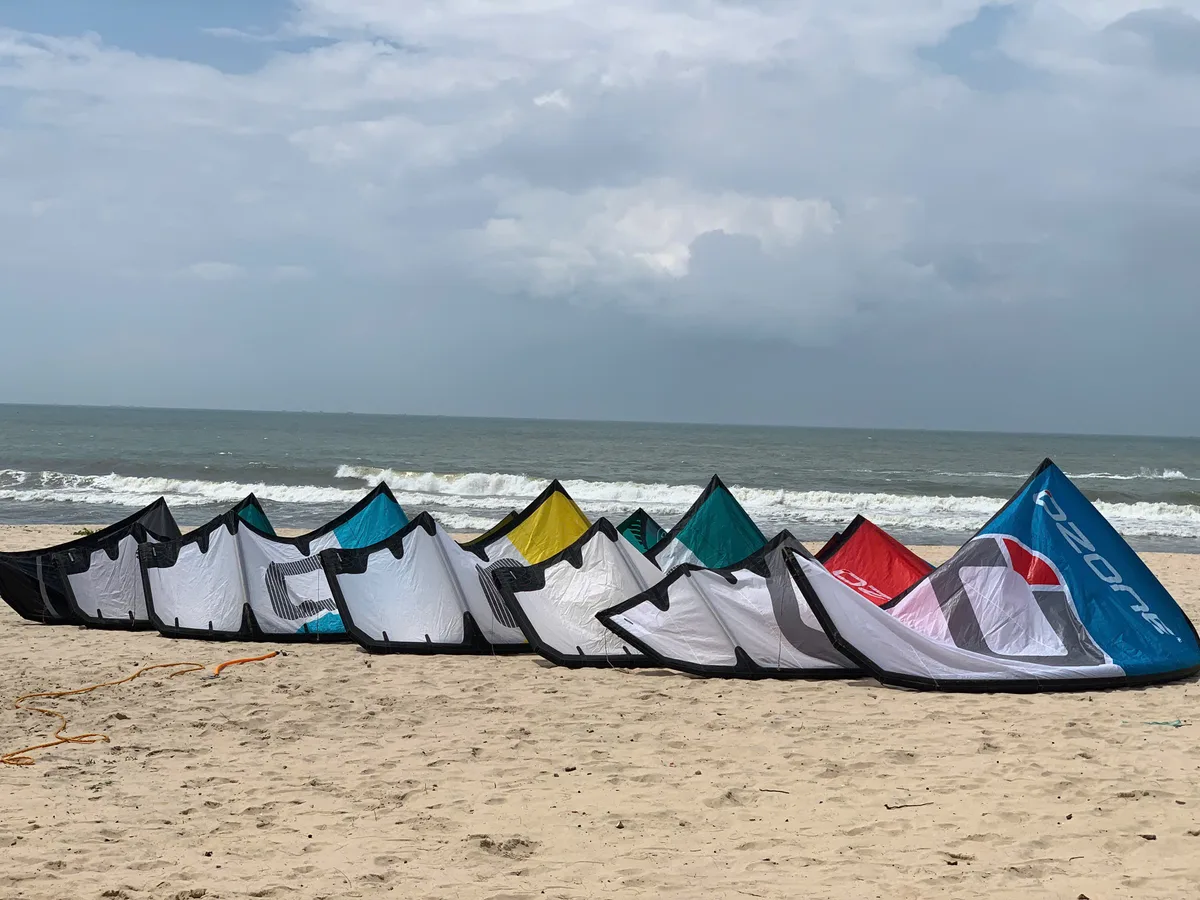
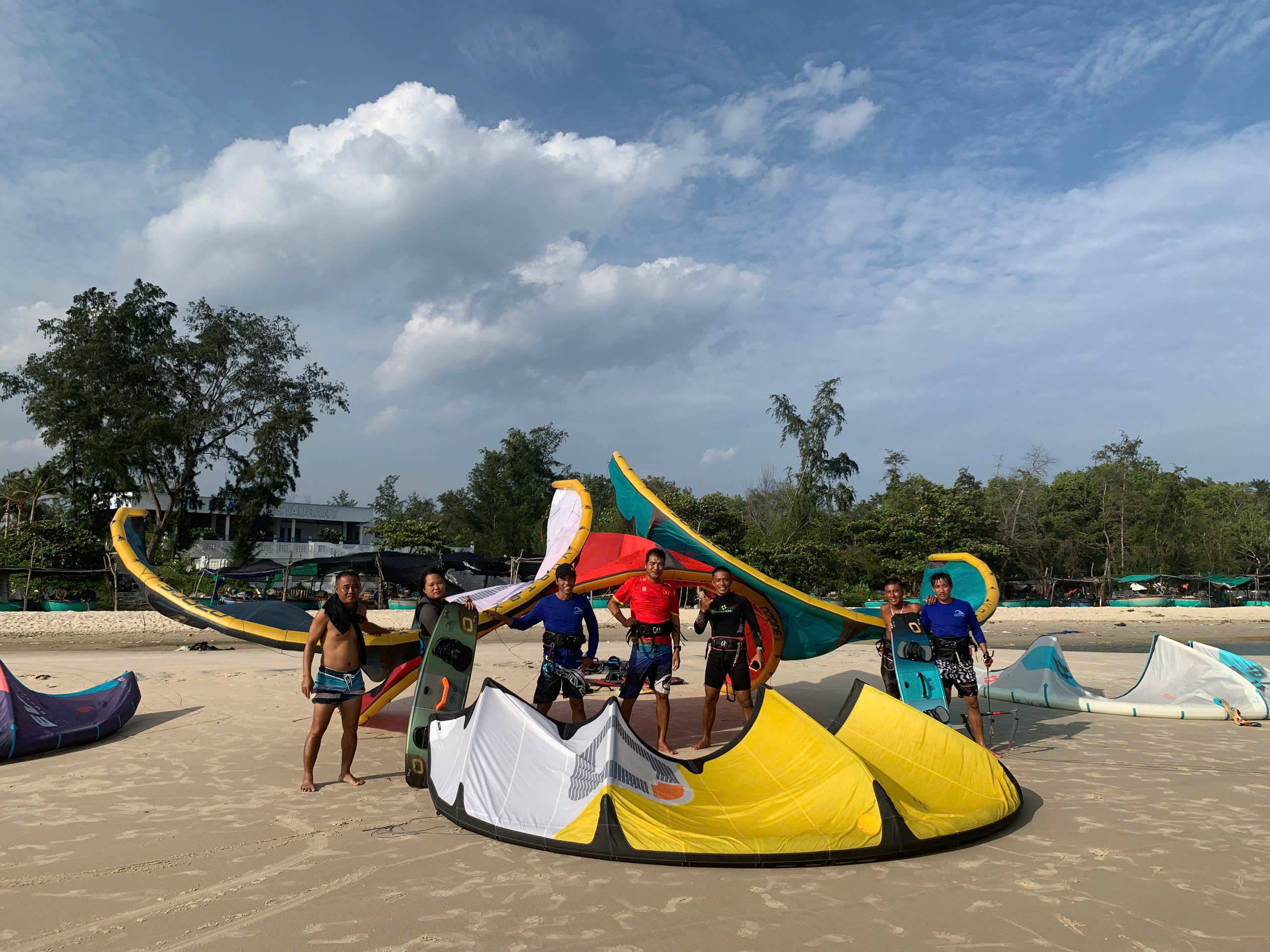
Thinking about learning to kiteboard in Vietnam? Mui Ne is one of the most popular kiteboarding destinations in Southeast Asia, with reliable wind, warm water, and a long beach that makes it an excellent place for beginners.
If you have never flown a kite or tried a board sport before, you may be wondering: How difficult is kiteboarding? How long does it take to learn? What should you prepare before your first lesson?
This beginner’s guide explains what to expect from kiteboarding lessons in Mui Ne, how the learning process works, when to come, and how to prepare for your first session.
Why Learn Kiteboarding in Mui Ne?
Mui Ne has become well known among kiteboarders because of its combination of wind, warm weather, and established kiteboarding schools.
The main kiteboarding season generally runs from around October to April, when the northeast monsoon brings consistent wind to the area. During the peak season, conditions are particularly attractive for both experienced riders and beginners.
There are several advantages to learning in Mui Ne:
- Consistent wind during the main season
- Warm tropical water
- No wetsuit usually required
- A long coastline with plenty of kiteboarding activity
- Experienced local instructors
- A well-established kiteboarding community
- Accommodation, restaurants, and other services close to the beach
For someone learning the sport for the first time, having reliable conditions is important. You want to spend your lesson learning rather than waiting for suitable wind.
Is Mui Ne Good for Beginner Kiteboarders?
Yes. Mui Ne can be an excellent place for beginners, provided you learn with a qualified and experienced instructor and choose appropriate conditions.
However, kiteboarding is not a sport that you should simply learn by watching other people on the beach.
A beginner needs to learn how to:
- Understand the wind and weather
- Set up and check the kite
- Control the kite safely
- Use the safety and release systems
- Manage the kite in the water
- Control the board
- Perform a water start
- Ride in both directions
- Control speed and stop safely
These skills are normally developed progressively during professional lessons.
What Do You Learn in Kiteboarding Lessons?
A good beginner course is not simply about getting on the board as quickly as possible.
Your instructor should first help you understand the fundamentals of kite control and safety.
1. Understanding the Wind
Before handling a kite, you need to understand the wind.
You will learn basic concepts such as:
- Wind direction
- Wind strength
- Wind window
- Upwind and downwind
- Wind safety
- Choosing appropriate equipment for the conditions
Understanding the wind is one of the most important foundations of kiteboarding.
2. Kite Control on Land
Your first practical experience will usually involve flying a smaller training kite or an appropriate kite under instructor supervision.
You will learn how the kite responds to your control inputs and how to keep it stable in the wind window.
This stage may look simple, but it is essential. Good kite control makes the later stages of learning much easier.
3. Kite Safety and Safety Systems
Safety is an essential part of every kiteboarding lesson.
You should learn how to:
- Use the control bar
- Activate the quick-release system
- Depower the kite
- Relaunch a kite from the water
- Respond when something goes wrong
- Understand basic self-rescue procedures
You should never skip the safety part of your training simply because you are eager to get on the board.
4. Body Dragging
Once you are comfortable controlling the kite, you will normally move into the water.
Body dragging teaches you how to move through the water while controlling the kite without using the board.
This is an important skill because it helps you understand how the kite generates power and teaches you how to recover the board if you lose it.
5. Water Start
The water start is one of the most exciting moments for a beginner.
You will learn how to position the board, control the kite, generate the right amount of power, and stand up on the board.
It can take several attempts to get this right. Falling is completely normal at this stage.
The important thing is learning to understand why you fell and how to adjust your kite position, body position, or board position on the next attempt.
6. Riding and Controlling Your Speed
After achieving your first water starts, the next goal is to ride with control.
You will work on:
- Maintaining balance
- Controlling the kite
- Controlling your speed
- Riding in both directions
- Stopping safely
- Recovering after a fall
At this point, kiteboarding starts to feel much more natural.
How Long Does It Take to Learn Kiteboarding?
There is no single answer because learning speed depends on several factors.
Your progress can be affected by:
- Previous experience with board sports
- General fitness and coordination
- Comfort in the water
- Ability to control the kite
- Wind conditions
- Quality of instruction
- How frequently you practice
Many beginners can learn the basic water-start and begin riding after several lessons, but becoming genuinely independent takes longer.
It is important to distinguish between being able to stand on the board and being able to kiteboard safely and independently.
A beginner should aim to develop reliable kite control, safety skills, and the ability to manage changing conditions—not simply complete one successful ride.
How Many Kiteboarding Lessons Do Beginners Need?
Most beginners benefit from a structured course rather than isolated lessons.
A typical progression may look like this:
Lesson 1–2:
Wind theory, equipment, safety, and basic kite control.
Lesson 2–3:
Kite control in the water and body dragging.
Lesson 3–5:
Board handling, water starts, and first rides.
Further lessons:
Improving control, riding upwind, independent launching and landing, and dealing with different conditions.
These numbers are only a general guide. Some students progress faster, while others need additional time.
The goal should be safe and controlled progression, not completing the course as quickly as possible.
Do I Need to Know How to Swim?
You should be comfortable in the water before taking kiteboarding lessons.
Kiteboarding takes place in an aquatic environment, and students need to be able to manage themselves in the water.
However, you do not need to be an advanced swimmer or competitive athlete.
Your instructor should also explain the safety procedures relevant to the conditions and equipment being used.
If you are not confident in the water, tell your instructor before starting the course.
Do I Need to Be Fit to Learn Kiteboarding?
You do not need exceptional fitness to start learning.
Kiteboarding does require some physical coordination and endurance, particularly when you are learning how to control the kite and board.
Beginners often find that the sport involves more technique than brute strength.
Good technique allows you to use the power of the kite efficiently rather than relying on physical strength.
If you have previous experience with surfing, wakeboarding, snowboarding, windsurfing, or other board sports, some aspects of learning may feel more familiar.
But you do not need previous board-sport experience to start.
What Should I Bring to a Kiteboarding Lesson?
Your kite school will normally provide the main kiteboarding equipment.
For your lesson, it is useful to bring:
- Swimwear
- Rash guard or sun-protective shirt
- Sunscreen
- Water
- Towel
- Sunglasses for before and after the session
- A positive attitude and patience
Depending on the conditions and school, additional protective equipment such as a helmet and impact vest may be provided or recommended.
Always ask your instructor what equipment is included before booking.
What Is the Best Time to Learn Kiteboarding in Mui Ne?
For most visitors, the main kiteboarding season in Mui Ne is from approximately October to April.
The northeast monsoon generally provides the wind that makes Mui Ne particularly attractive for kiteboarding in Mui Ne during this period.
Wind conditions can vary from day to day, however, so there is no guarantee that every day will have ideal conditions.
If you are planning a kiteboarding trip, staying for several days rather than scheduling only one lesson can give you more flexibility to work around the weather.
The best time of day can also depend on the wind conditions. Your instructor or kite school can advise you based on the forecast and current conditions.
How Much Do Kiteboarding Lessons in Mui Ne Cost?
Prices vary depending on the school, instructor, course length, equipment, and whether the lesson is private or shared.
When comparing prices, do not look only at the number of hours or the headline price.
Check what is included:
- Instructor
- Kiteboarding equipment
- Safety equipment
- Insurance, if applicable
- Number of students per instructor
- Transportation, if offered
- Number of actual water-training hours
A cheaper lesson is not necessarily better value if you receive less instructor attention or spend significant time waiting for equipment.
For beginners, the quality and safety of instruction should be more important than finding the lowest price.
Private vs. Group Kiteboarding Lessons
Both private and group lessons can work, but they provide different learning experiences.
Private Lessons
Private lessons give you one-on-one attention from the instructor.
They are particularly useful if:
- You want to progress quickly
- You have limited time in Mui Ne
- You need additional help with a specific skill
- You prefer a personalized learning pace
Small Group Lessons
Small-group lessons can be a good option if you want to learn in a more social environment.
They may also be more economical, although the amount of individual instructor attention can be lower.
If you are completely new to kiteboarding, ask how many students will be assigned to each instructor before booking.
Is Kiteboarding Difficult to Learn?
Kiteboarding is challenging at first, but it is very learnable with proper instruction.
The most difficult part for many beginners is coordinating several things at the same time:
- Kite position
- Bar control
- Wind direction
- Body position
- Board position
- Power management
During your first sessions, this can feel overwhelming.
With practice, however, these actions gradually become more automatic.
One of the biggest mistakes beginners make is trying to progress too quickly. Good kiteboarding technique comes from learning to control the kite first and gradually adding the board.
Common Mistakes Beginners Should Avoid
Trying to Learn Without Professional Instruction
Kiteboarding involves powerful equipment and changing environmental conditions.
Learning from videos alone is not a substitute for professional instruction.
Choosing Equipment Based Only on Appearance
The largest or most powerful kite is not necessarily the best kite for a beginner.
Equipment should be selected according to wind conditions, rider weight, skill level, and other factors.
Focusing Only on the Board
Many beginners are excited about riding and want to get on the board immediately.
However, strong kite control is the foundation of the sport.
Ignoring Safety
Never treat safety procedures as optional.
Knowing how to release the kite and respond to unexpected situations is part of becoming an independent kiteboarder.
Learning in Conditions That Are Too Strong
More wind does not necessarily mean better conditions for learning.
Beginners generally need conditions that match their skill level and equipment.
Your instructor should determine whether the conditions are appropriate for your lesson.
Where Can You Learn Kiteboarding in Mui Ne?
There are several kiteboarding schools and instructors around the Mui Ne coastline.
When choosing a school, consider:
- Instructor experience
- Student-to-instructor ratio
- Safety procedures
- Equipment quality
- Lesson structure
- Communication with the instructor
- Reviews from previous students
- Whether the school teaches beginners regularly
If possible, talk to the instructor before booking. A good instructor should be able to explain the learning process clearly and answer questions about safety.
Start Your Kiteboarding Journey in Mui Ne
Learning to kiteboard is an exciting experience, and Mui Ne offers excellent conditions for people who want to discover the sport.
The key is to approach your first lessons with realistic expectations. You may not become an independent rider after one session, and that is completely normal.
Focus on learning the fundamentals:
understand the wind → control the kite → learn water safety → body drag → water start → ride with control → become independent.
With good instruction, suitable conditions, and regular practice, you can build the skills and confidence needed to enjoy kiteboarding safely.
If you are planning to learn in Mui Ne, Pha Kiteboarding offers beginner kiteboarding lessons with instruction focused on safety, kite control, and progressive learning.
Learn more about Kiteboarding Lessons in Mui Ne →
Frequently Asked Questions
Can beginners learn kiteboarding in Mui Ne?
Yes. Mui Ne is a popular destination for learning kiteboarding, particularly during the main windy season. Beginners should learn with an experienced instructor and appropriate equipment.
How many days do I need to learn kiteboarding?
The number of days varies from person to person. Several lessons can be enough to begin water starts and short rides, while becoming independent generally requires more practice.
Is kiteboarding safe for beginners?
Kiteboarding has inherent risks, but professional instruction, appropriate equipment, suitable weather conditions, and proper safety procedures can significantly reduce those risks.
Do I need previous surfing experience?
No. You do not need previous surfing, wakeboarding, or windsurfing experience. Beginners can learn the fundamentals from the beginning.
What months are best for kiteboarding in Mui Ne?
The main kiteboarding season is generally around October to April, when the northeast monsoon typically brings favorable wind conditions. Actual conditions vary, so always check the forecast with your instructor.
Can children learn kiteboarding?
It depends on the child's age, swimming ability, physical development, confidence in the water, and the conditions on the day. A professional instructor should assess whether the child is ready before starting.
Should I book private or group lessons?
Private lessons generally provide more individual attention and can be useful if you have limited time or want to progress efficiently. Small-group lessons can be a good option for a more social and potentially lower-cost experience.
Can I learn kiteboarding in one day?
You can learn important fundamentals in one day, but becoming a safe and independent kiteboarder normally requires multiple sessions. Learning should be based on skill development rather than a fixed number of days.
Ready to learn kiteboarding in Mui Ne?
Start with the fundamentals, learn from an experienced instructor, and enjoy the process.
Pha Kiteboarding — Kiteboarding Lessons in Mui Ne, Vietnam.
Learn more about Kiteboarding Lessons in Mui Ne